Execution problems, almost without exception, never announce themselves outright. Nothing breaks all at once in a way that’s easy to point to and name.
Instead, a decision that once took a single conversation now quietly requires an entire meeting. A sign-off that used to happen naturally, almost invisibly, now needs a second layer of approval that wasn’t there before.
People build workarounds rather than raising the actual issue directly, because the workaround feels faster and considerably less confrontational in the moment.
The easy explanation, reached for almost automatically, is “growing pains.” More people naturally produce more process, the reasoning goes, and sometimes that reasoning is exactly right.

Sometimes, though, it’s quietly covering for something far more specific.
Roughly half of all outside senior hires fail within eighteen months, a strange and uncomfortable number given how much time and money organizations invest in getting hiring right.
One explanation deserves more attention than it usually receives: companies often judge a candidate, or an existing leader already in the seat, against the job as it used to exist, rather than the job the company is actively becoming.
A leader who thrived running a fifty-million-dollar company may still be relying on the same decision-making style and the same delegation habits inside a hundred-and-fifty-million-dollar version of that very company. They didn’t become a worse leader in the interim. The seat simply changed size underneath them, gradually enough that no one quite noticed the moment it happened.
Before you assess the leader, audit the workarounds
Organizations rarely name this mismatch directly or right away.
Instead, people quietly adjust around it, one small accommodation at a time.
A peer starts sitting in on meetings that used to run without them, just to help keep decisions moving. Someone adds an extra layer of sign-off “just to be safe,” and it becomes permanent without anyone deciding it should. Other leaders begin routing decisions around this person entirely, rather than through them, because it’s simply faster and no one wants the friction of naming why.
Each individual fix looks entirely harmless in isolation.
But those workarounds are also data.
If multiple capable people independently begin compensating for the same seat, the pattern can reveal something an individual performance review may not. It shows where the organization has begun redesigning itself informally to compensate for something the formal operating model no longer handles well.
Add enough of those accommodations together over six months, and an organization finds it has quietly built an entire operating model that nobody consciously chose — one where decisions now take three separate conversations to resolve what a single conversation used to settle cleanly.
By the time the mismatch becomes obvious to everyone in the room, the organization is left solving two distinct problems rather than one: the original gap itself, and every workaround that has since been built up around it, each of which now has to be carefully dismantled in turn.
That compounding cost is what makes early detection so valuable, and so consistently underrated.
The more useful question, in our experience, isn’t whether someone is a good leader or a bad one in some general sense — that framing rarely produces a clean or honest answer.
Before asking that question at all, look at what the organization has started doing around the seat.
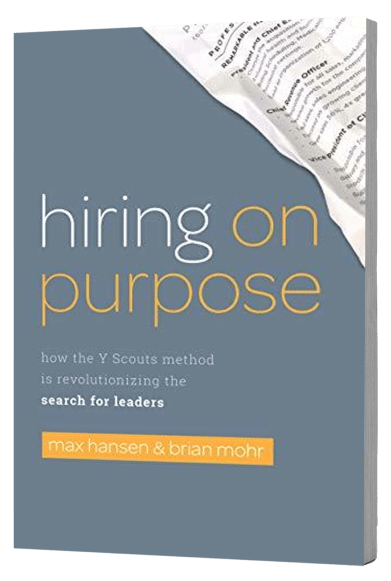
This is exactly the kind of question our Leadership Model was built to help answer: not an abstract judgment about leadership quality, but a specific, evidence-based read on whether someone’s particular mix of relentless learning, developing others, and driving results still fits the shape of the role in front of them.
A few signals are worth watching closely:
- Count the workarounds. Are other leaders routing decisions elsewhere, sitting in on meetings they didn’t previously attend, or duplicating parts of the role without saying so out loud?
- Look for “temporary” processes that became permanent. Where have additional approvals, checkpoints, or layers appeared without anyone deliberately redesigning the operating model?
- Time the decisions themselves. Are calls that once took a single day now stretching to a week, and can you trace where that additional time entered the process?
One workaround may be nothing more than a practical solution to a temporary problem.
A collection of them around the same seat is different. It can be an early warning system.
Before concluding that the organization is simply getting slower because it’s getting bigger, audit the accommodations people have quietly built around the leadership team. They may tell you exactly where to look next.
Y Scouts’ Role Visioning process — a useful way to define what a seat needs to deliver next, even before deciding whether a change is needed at all.