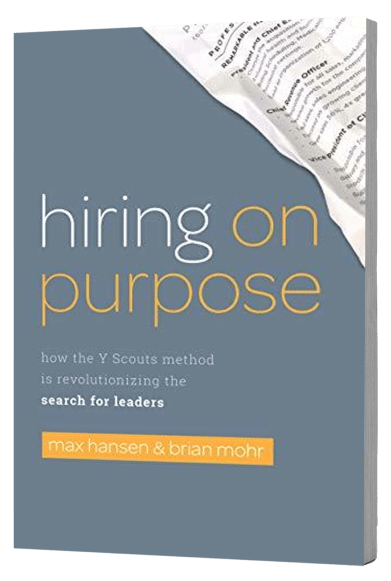
When most companies sit down to write a job description, they start building a list. Ten years of experience. Industry experience. A degree from the right kind of school.
These scripted requirements seem like a responsible way to structure your executive search. After all, they feel centered on risk reduction.
But when you talk to executive recruitment firms, especially the ones placing VP and C-suite talent, you hear the opposite message. The best hiring outcomes rarely come from a checklist. In fact, the more rigid the checklist, the more likely you are to miss the right hire.
That might sound counterintuitive. But here are five flaws top executive recruiters consistently identify in checklist hiring, and why they steer companies toward other methods.

1. Checklists Confuse Credentials with Capability
It’s easy to measure years of experience and count team members. It’s easy to verify titles and degrees. Checklist hiring leans heavily on what is easy to measure and hopes that the candidate with the right qualifications fits your needs.
But executive success is not easily captured in a list. You need leaders who can make decisions with incomplete information and align a team around an evolving strategy. You can’t assess key leadership skills by simply reading someone’s resume.
C-level recruiters don’t just look at credentials; they evaluate how executives actually operate. They do this through structured, repeated conversations with candidates and their references, as well as through behavioral and motivational assessments that test capabilities. Expert headhunters look for patterns in judgment, conflict resolution, communication, problem-solving, and influence to find candidates who can lead.
When you deepen your hiring approach to focus on the candidate’s human leadership traits, rather than their easy-to-measure credentials, you get a clearer picture of your potential executive.
2. Standardized Protocols Ignore Context
Two candidates can both check the box for “led a team of 50,” but the reality behind that experience can be completely different. One executive may have inherited a high-performing team with strong systems already in place. The other leader may have built that team from the ground up, hiring, training, and setting the culture.
A checklist treats those experiences as equal when they are very different. And you don’t know which C-level candidate has the skills and fits your company’s needs if you’re relying on standardized hiring protocols that only count checked boxes. That’s a big risk.
On the other hand, executive recruitment firms spend time getting to know the candidate and understanding the context. They want to know where the leader started, what challenges they faced, what decisions they made, and how the executive personally changed and grew from their experiences. C-level search agencies look for evidence of ownership and impact.
When you look at resumes and credentials as part of a story (not just a list), you can better identify which executives have the experience and skills to perform in your environment.
3. Strict Criteria Exclude High-Upside Candidates
Checklist hiring protects you from grossly unqualified candidates, but it also limits you to the obvious choices. Some of the strongest executive hires may come from different industries, and they may have held titles that are different from the one you’re hiring for. The leaders who might be one step removed from your ideal background often have the greatest potential. And a checklist filters these people out before the conversation even starts.
C-level search firms intentionally look beyond exact matches because they’ve seen how adjacent experience can translate into better performance. A Chief Marketing Officer (CMO) who launched and expanded a product into new locations can outperform a leader who only operated within an established system. A candidate from a fast-paced industry might bring urgency and efficiency to your teams.
When you depend on a checklist, you narrow your field to people who look safe. Nontraditional retained search firms widen the field to people who don’t look perfect on paper but have the potential to be exceptional leaders for your company.
4. Checklists Create a False Sense of Security
It feels like a safe decision when a candidate checks every box. A checklist makes it easy to explain your choice to investors, board members, and other executives, and gives the impression that you’ve done your due diligence.
But that confidence can be misleading. Plenty of hires who looked perfect on paper fail in the role. It’s not a lack of skill, but a mismatch between the candidate’s operational style and the role that your checklist missed. This might include a Chief Financial Officer (CFO) with deep public-company reporting experience who can’t keep up with your fast-moving, private environment.
Executive search firms know that hiring at this level is always a judgment call, and they make that judgment explicit. In discussion with you and your stakeholders, they weigh the trade-offs and openly discuss the risks with each candidate.
Knowing the pros and cons of your new hire makes you more confident in your decision. You’re replacing the artificial certainty of a perfect score with your informed judgment of how the candidate aligns with your specific situation.
5. Rigid Templates Fail to Assess Candidate Outcomes
A hiring template fundamentally focuses on candidate inputs. You pay attention to a candidate’s titles, experience with tools, previous employers, and years in their role. That information gives you a snapshot of their professional life, but none of that information tells you what they will help your company achieve.
You don’t hire a C-level leader just to fill a chair at the table. You expect them to increase revenue, improve efficiency, build systems, and solve problems. You want a leader who will engage in their role, not simply participate.
Finding an active leader requires shifting your focus from inputs to outcomes during the hiring process. Executive recruiters anchor the entire process around how candidates have changed their companies in the past. They question references and experts in their network to determine whether this potential hire takes initiative, adds value to their teams, solves problems, and drives change.
An outcome-focused recruitment process shows what leaders can deliver.
Ditch the List
When you move away from checklist hiring, you stop making decisions based on comfort and start recruiting for performance and talent. That is exactly why executive recruitment firms keep telling companies that, though a checklist seems like protection, it’s actually holding you back.
And checklist hiring reaches beyond just recruitment. To learn how this process can actually cost your company’s long-term success, stay tuned for our next article