When it comes to securing the best talent for senior leadership positions, you need a thorough recruitment process. But finding a leader capable of steering your business to long-term success can often feel like a frustrating, complex, and never-ending pursuit.
Partnering with a C-level recruitment firm can simplify your retained executive search process while ensuring your future leadership aligns with your organization’s goals and values. Let’s walk through the timeline for this hiring strategy to understand how effective and efficient it can be.

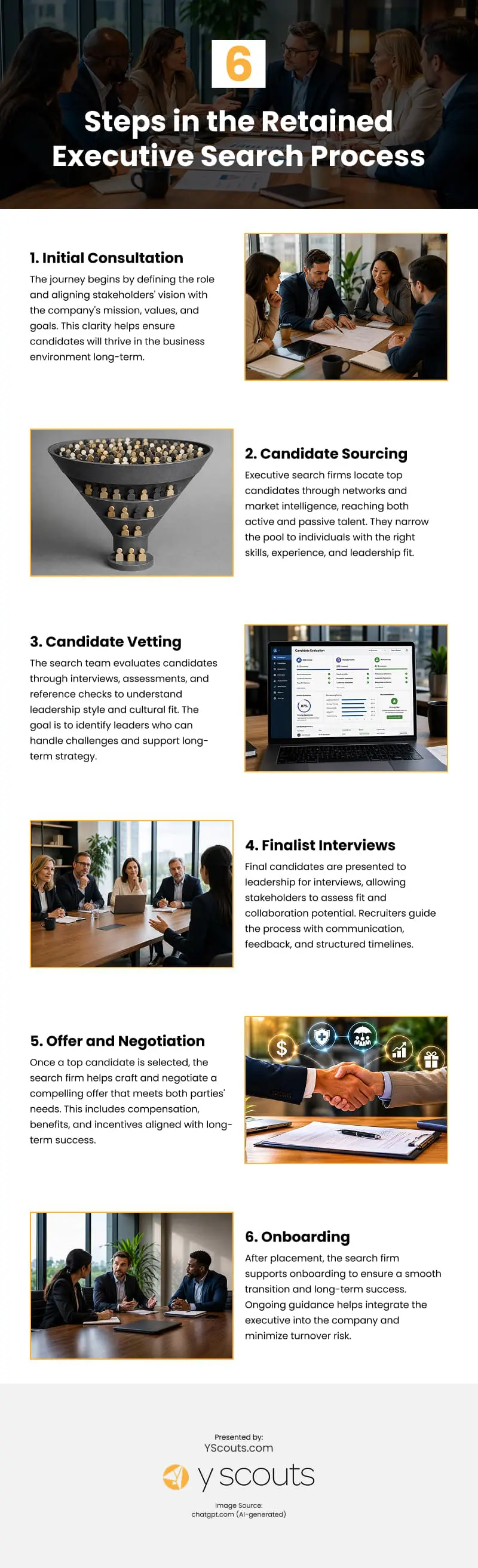
1. Initial Consultation
The journey begins by defining the role. This critical step aligns stakeholders’ vision for the role with the company’s broader mission and values. During this phase, your executive search firm will engage in a deep discussion with your team to understand your business’s culture, goals, challenges, and purpose.
You’ll also outline the job’s responsibilities as well as the skills and qualifications a candidate needs to be successful in that role. That includes required leadership qualities, specific industry experience, compatible soft skills, and cultural alignment.
One of the reasons the retained search process is so effective is the focus on hiring for shared mission and values. Misalignment between a leader’s vision and your company’s culture often leads to failed placements and higher turnover.
When you begin with clarity, you set the stage for hiring candidates who will thrive in your business environment for years to come.
2. Candidate Sourcing
Executive search firms then move into locating the best candidates for your company. On your own, you could rely on job boards or other methods that advertise to active job hunters. A retained search firm discreetly reaches out to passive candidates through its extensive networks and market intelligence. These connections give you access to a more talented, diverse pool of candidates so that you can find the perfect fit for your company.
The recruitment team then narrows the pool based on the role you defined. They focus on finding candidates with the necessary skills and experience, and who are capable of leading and inspiring teams in your specific environment.
If you have specific recruiting needs, a search partner is a distinct advantage. For example, let’s say you need a Chief Marketing Officer (CMO) for your business-to-business (B2B) industrial manufacturing company. Someone with the right general marketing skills may look good on paper but fall short in your particular role. A CMO executive search firm for manufacturing companies knows who to contact and which qualities you really need.
Retained search firms also ensure confidentiality. They protect your company from rumors or bad publicity by presenting your opportunity to candidates without naming your company. And because they reach out to many executives for important roles, they keep candidate information private during this stage.
3. Candidate Vetting
Once a search team identifies a shortlist of candidates, it actively vets and assesses the potential leaders. The goal is to understand how candidates have handled past challenges and how they will respond to the unique obstacles your company faces.
An effective search firm employs a range of tools and strategies to assess candidates, including psychometric tests, leadership-style evaluations, in-depth personal interviews, reference checks, and scenario-based assessments. The goal is to identify candidates who meet your criteria and resonate with your company’s culture and values.
This stage is also where C-suite recruiters focus on long-term strategy. Does an executive have experience navigating your company’s growth stage? Or do they have the skills to address your specific challenges? If so, they may be the leader who can guide your company into the future.
4. Finalist Interviews
Now your executive search firm presents its list of finalists to your leadership team for interviews. This stage is a chance for you and other stakeholders to get to know the candidates firsthand, especially how each leader will mesh with your team.
Your executive search firm continues to support you and the candidates throughout the interview process. They can suggest best practices to make your conversations more effective both during the interview and after. This phase requires collaboration and feedback from your leadership team, which can complicate the hiring process. Retained recruiters keep things moving with transparent communication and deadlines.
C-level hiring partners also help manage expectations during the interview stage and address questions or concerns from candidates and stakeholders. They make sure all parties understand the terms of employment and leadership responsibilities going forward.
5. Offer and Negotiation
Once you select your top candidate, you can make an offer. This phase can sometimes be tricky if you aren’t familiar with the candidate’s unique expectations. Having a search firm at your side makes it easy to craft a compelling offer that can satisfy both you and the candidate.
Your offer needs to include the basics, such as compensation and benefits, but a strong executive search firm will help you structure a package that goes beyond salary. They understand the candidate’s needs and motivations and can suggest appealing benefits that support long-term success.
If the perfect Chief Financial Officer (CFO) values their family time, for example, your hiring partner might suggest adding hybrid work options or vacation incentives to their employment terms. Or if the right Chief Operating Officer (COO) wants to transition to a Chief Executive Officer (CEO) in their career, including development and mentorship opportunities in their package can seal the deal.
Your executive search firm also proactively facilitates negotiations. They work with you and the candidate to agree on an offer without stretching the process out for months. Their efficiency and transparency make sure that interested candidates don’t drop out at the last minute.
6. Onboarding
Successful onboarding is key to setting up your new executive for success. The sooner a new candidate feels comfortable and prepared in their role, the sooner they can start leading.
Retained executive search firms often continue their support for several months after placement to ensure a smooth transition. They may introduce the new executive to all relevant stakeholders and provide the resources needed to get started. A C-level hiring partner can also offer guidance for you and the new hire on integrating into the team and culture.
Your search firm will continue to check in and maintain a relationship with both the company and the new hire to ensure ongoing success. They’ll help address any challenges that arise and offer advice on leadership development and succession planning. Ongoing support from your search firm minimizes turnover risk and maximizes the likelihood of long-term success for your new executive and your company.
Relationship-Driven Search
Retained search firms are long-term partners who know the value of relationships. The most successful leader is the one who connects with your company and relates to your C-level team. That executive will thrive in your organization and drive growth.
Executive recruiters know that finding these leaders starts with connecting and investing in people. At its core, a retained executive search is really a relationship-driven search, and that focus makes all the difference for your candidates and your company.
Video

Infographic
Recruiting senior leaders requires a structured process that identifies candidates who can drive long‑term growth and align with company culture. Discover the key steps in a retained executive search in this infographic.