When a leadership role opens up at your manufacturing firm, you face plenty of pressure to get it right. So you meet with other stakeholders to define the next candidate’s needs and list the industry background, plant-size experience, specific systems knowledge, minimum production volume, and number of years in manufacturing leadership.
The thinking is that the more specific you can be, the more likely you’ll find the right leader. And in manufacturing, where no two facilities operate the same way, this pattern is especially common. You want someone who knows what they’re walking into and can lead right away.
In practice, though, manufacturing executive search firms and other recruiting experts don’t see safer and better results from over-defining hiring criteria. Each requirement, while reasonable on its own, poses risks that too often push your search toward the wrong leader.
1. Getting a Smaller, More Expensive Talent Pool
Every qualification you add to an executive job description narrows the number of people who will realistically apply and pass the initial filter. Some requirements are necessary for the quality of the candidates. Others simply make your search harder.
Say you’re starting a Chief Operating Officer (COO) executive search. You and other stakeholders decide the best candidate has 20 years of experience in your exact manufacturing niche, experience with a specific software system, and a background leading companies of a certain size.
You may find a handful of executives who check every box. But now you face a few problems. Those few candidates know they’re in high demand. They can take their time and negotiate better compensation because they have plenty of opportunities. You risk chasing executives that aren’t really interested or overspending to hire one of these unicorns.
And the longer a key leadership role remains open, the longer other executives must cover additional responsibilities. Important decisions may stall. Growth initiatives may wait. Your company loses momentum while competitors keep moving.
On the other hand, other strong leaders often choose not to apply. A candidate with 15 years of experience improving operations across several manufacturing sectors assumes they won’t make it through your screening process. The same for an executive with experience in logistics or aerospace. You missed the chance even to consider a candidate beyond what you imagined.
2. Overlooking High-Potential Leaders
Rigid requirements shrink the candidate pool. They also tend to eliminate executives with strong track records in different contexts. These leaders can solve problems, build strong teams, adapt to new situations, and make well-reasoned decisions, but they don’t check every box
Think about candidates in a Chief Marketing Officer (CMO) executive search for manufacturing companies. There might be an executive from industrial distribution who developed relationships with distributors and consumers. Or maybe there’s a leader in an aerospace company who timed projects with long buying cycles. Their industries differ, but they’ve managed complex operations, balanced budgets, developed leaders, and guided organizations through change.
A checklist built around exact experience doesn’t capture any leadership skills. Instead, it looks for someone who has already done this job somewhere else and assumes that person will move the company forward. Meanwhile, the leaders who bring fresh ideas and would push your operation in a new direction may never make it past the first screen.
Screening for experience may find someone who has spent decades in your exact industry and understands every technical detail. But that executive may struggle to lead through change or inspire people. Familiarity with your products does not automatically make someone the best leader.
3. Compounding Sameness Over Time
Manufacturing organizations that fill leadership roles from a narrow template tend to get predictable results. The same approaches to production challenges. The same ideas about what’s possible. The same assumptions about how things have to work.
But manufacturing is changing quickly. New technology, automation, artificial intelligence, and changing customer expectations are reshaping how companies operate. Meeting those challenges often requires leaders who can innovate and think creatively.
The leaders who can shift your direction are often the ones who bring a different vantage point. An executive who spent years in technology may introduce better ways to use data. Someone from consumer products may improve how your company listens to customers. A logistics leader may uncover opportunities to streamline your supply chain. These ideas build on manufacturing expertise.
The strongest executive teams combine people who know the business inside and out with leaders who challenge assumptions and ask different questions. That mix helps you solve problems more creatively and prepare for changes before your competitors do.
4. Optimizing for the Past
It’s easy to write a job description around the experience that helped your company succeed over the last decade. But manufacturing isn’t standing still. Your next executive hire should prepare your company for the future, not simply preserve the past.
If you focus qualifications only on traditional manufacturing experience, you may miss executives who have already led organizations through these kinds of changes. A candidate who helped digitize operations in another industry or managed a large technology rollout can bring valuable experience.
Ask yourself what your business will need five years from now. Then build your qualifications around those goals. Good hiring criteria may still include manufacturing knowledge, but in the context of leaders who can manage uncertainty and prepare organizations for what’s next.
5. Slowing Organizational Growth
Every one of these hiring risks eventually leads to slower growth for your manufacturing organization. These problems build gradually. When executive searches take longer, important projects get delayed. When your leadership team thinks alike, innovation slows. When you hire only for yesterday’s challenges, your company struggles to keep pace with tomorrow’s opportunities. Over time, those small setbacks add up.
On the other hand, strong executive hiring creates momentum. The right recruitment process attracts a rich and diverse collection of leaders who make sound decisions, develop strong teams, think creatively, and respond quickly to change. And with top-tier executives on your C-team, other talented people naturally want to work for your company.
That doesn’t happen because every executive has an identical background. So before you add another requirement to your executive job description, ask yourself whether the qualification is truly necessary to succeed or simply a matter of familiarity. The answer could determine whether you hire someone who maintains your business or someone who helps it grow.
A Better Way to Define the Role
Experienced executive search firms recommend and define leadership roles differently. Instead of asking what someone needs to have done, focus on what you need the candidate to accomplish. Answer questions like:
- What does success look like in the first year?
- What challenges does this leader need to solve?
- What kind of person will work with the current leadership team to make decisions?
- What communication styles will land well with the team they’re joining?
- What is the culture of this plant that the candidate needs to share?
Getting to that clarity requires focused conversation with the right people inside your organization and genuine agreement on what this leader actually needs to accomplish. Without that alignment, different stakeholders evaluate candidates against different standards, and strong leaders fall through the cracks.
Once you’ve agreed on the success criteria for your new hire, evaluate if each candidate has the leadership skills to achieve your goals. Use reference checks and network connections to determine how candidates have led in the past. Ask questions and plan scenarios around specific skills to see those skills in action during interviews and case studies.
Understanding what the role genuinely demands and what the organization needs from the person filling it opens the search to new, high-impact talent. And you can often hire the next executive more quickly and for less money than when you rely on a standard template.
The Right Profile Is Broader Than You Think
The goal to find someone who checks every box too often leads to a misaligned executive hire. And when each round of hiring disrupts your teams and company momentum, recruiting the wrong candidate can cost you more than $1 million. That kind of mistake really sets your manufacturing company back.
When you move from checklists to outcomes, you automatically upgrade your executive searches to find the right candidates for your company. The candidates may or may not match the expected profile. But you can be confident they’ll lead your manufacturing organization forward.
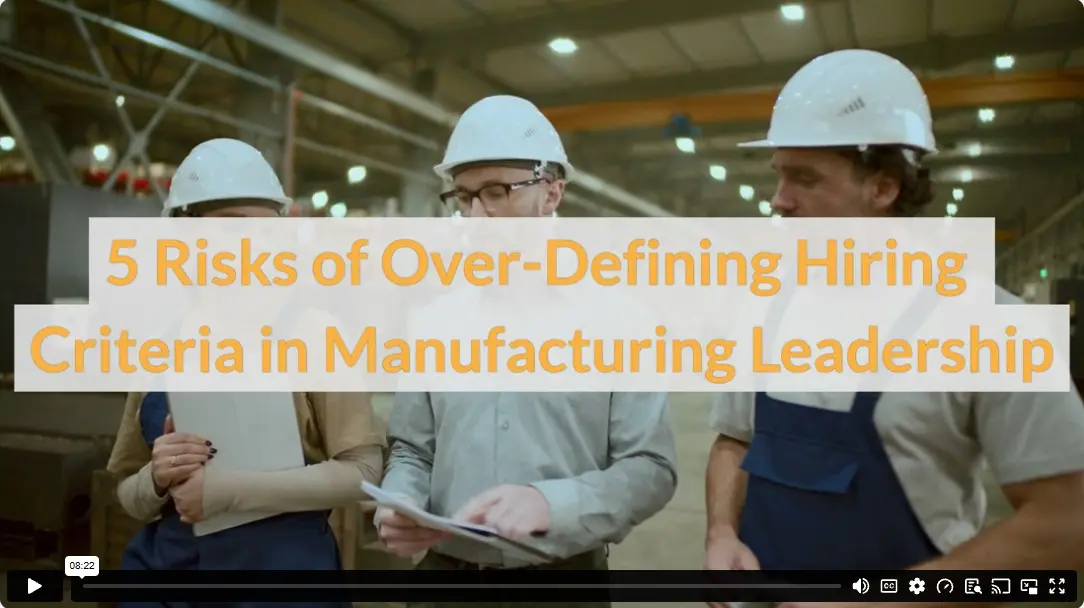
Video
Infographic
Over-defining hiring criteria in manufacturing leadership searches may seem like risk reduction, but recruiting experts consistently see it produce the opposite result: eliminating the best candidates early. Find out the risks of over-defining hiring in manufacturing leadership in this infographic.