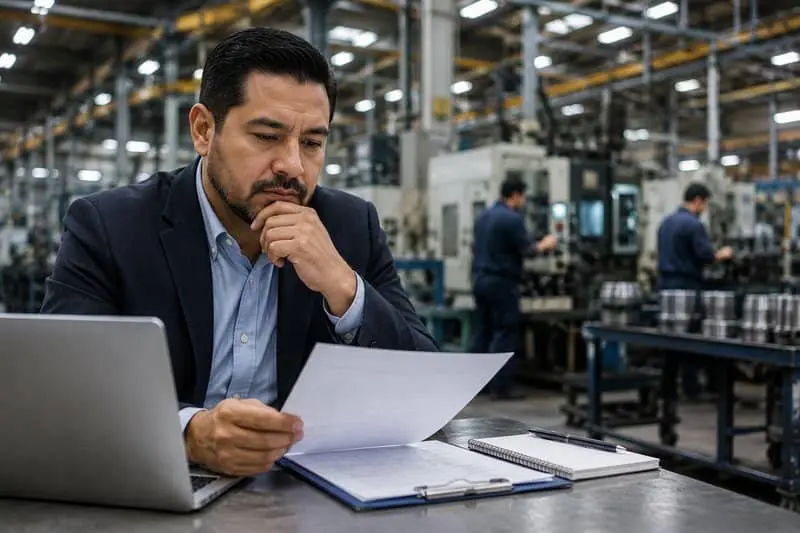
When you’re hiring a senior leader for your manufacturing operation, you have no shortage of information on the candidates. Resume after resume comes in with plant sizes, years of industry experience, technology background, and a list of certifications. All of it looks relevant.
But it’s almost too much information, especially when much of it is just noise. It’s like being surrounded by 100 speakers, each playing a different song. Even if you know every note of your favorite tune, you’ll struggle to pick it out in the din. Learning to distinguish candidates who look impressive from executives who will actually lead your manufacturing company is a similar challenge.
Credentials Can Distract You
Experience matters in manufacturing leadership. A candidate with 15 years of experience in a similar industry and familiarity with the right systems is someone who can transfer to your operations quickly and easily. It looks like a safe bet.
But experience doesn’t guarantee strong leadership. Consider two Chief Technology Officer (CTO) candidates with nearly identical backgrounds. One executive maintains the status quo and focuses on keeping their team comfortable. The other CTO drives continuous improvement and earns real trust across your operations.
Their backgrounds may be the same, but they operate completely differently once they’re in the seat. And the credentials on the resume don’t tell you which is which. Experience tells you what someone has been exposed to, not what they have actually changed.
But that doesn’t keep many manufacturing companies from focusing on industry background and plant experience. Credentials are far easier to verify than leadership qualities, so they often become the default hiring standard. That’s when experience distracts you from the strongest candidates.
Interviews Alone Don’t Cut It
Manufacturing executive search firms and other hiring experts see many companies relying on interviews to balance against candidate credentials. But even when you ask candidates about their experience, you’re not likely to learn the whole truth about their leadership style and strengths.
A well-prepared candidate can answer almost any behavioral question with a polished response. They’ve anticipated the typical prompts and know what good answers sound like. What they share may be accurate, but it may also be shaped to fit your expectations.
And a standard interview leaves you open to emotional decisions. You might be distracted from deeper questions by buzzwords, like when a candidate talks about being data-driven and results-oriented. Or you might advance an executive to the next stage simply because you’re wowed by their charisma.
Even with great instincts, you’re risking your operation’s future when you use standard interviews to evaluate candidate credentials. You need more than someone you like or who can answer questions smoothly to lead your company.
A More Focused Executive Search
You need a more structured approach to evaluating candidates to cut through the noise and better understand how they will actually perform in your manufacturing operations.
Define the Role
Start by deciding before the search what strong performance in this specific role actually looks like. This requires honest conversations about what the role demands.
If you’re hiring a manufacturing CTO, for example, you may need someone who can lead your research and development team and apply innovative engineering. Or you might need someone who understands emerging technology trends to direct your investments and optimize your operations.
Getting on the same page isn’t always easy when everyone has different opinions, and the clock is ticking. Partnering with a CTO search firm can streamline the conversation between stakeholders and help you define success in the role.
Connect Credentials to Success
Once you know what your manufacturing company needs from the new hire, you can work backward. When a candidate’s background connects clearly to your requirements, you have a much better sense of whether they’re ready for what’s ahead.
Say you’re looking for a Vice President (VP) who can reduce costs at your plant. You don’t need a candidate with experience building leadership pipelines, and that experience might not help them meet your outcomes. But an executive with experience negotiating supplier costs and reducing waste has the right background to be successful in your organization.
Discover Real-World Leadership Experience
You probably ask for references as part of your standard hiring process. But you can learn a lot about how their credentials have translated into leadership when you ask the right questions to a broader sample of people.
Consider a candidate for VP who previously worked as Director of Manufacturing. Talking to the Director of Engineering from the same company gives you an idea of how the executive worked across functions. Or you could call a member of the candidate’s manufacturing team to discover how well the leader inspires trust. Even a peer at a competing plant could point to the candidate’s impact and reputation.
Ask about how the executive improved operations, made decisions under pressure, built credibility across functions, and performed over time. These traits separate strong manufacturing leaders from average ones. You can add additional questions related to your success outcomes, such as whether the candidate for VP can hold teams accountable.
Reference checks like this can be time-consuming. That’s why many people work with C-level recruiters. These hiring experts can tap into a network of industry contacts to both find interested, qualified candidates and discover their real-world experience. Some search firms even specialize in these services. For example, you could team up with a VP executive recruiter for manufacturing companies and leverage their niche expertise.
Ask Specific, Probing Questions
Outside verification is nice, but only the candidate can explain their mindset and motivations. Follow up with the leaders who passed the reference checks by asking specific, probing questions in a structured interview.
A good interview centers on the role requirements and the leadership qualities your new hire needs to succeed. Skip basic questions like “Tell us about yourself” or “What is your greatest strength?” Instead, ask the candidate about their mindset and choices that led to a win as well as their approach that led to a failure.
To avoid emotional decisions and ensure each candidate has a comparable experience, follow the same approach each time. You can ask the same questions or use different phrasing, so long as it hits on the same success outcomes and leadership skills every time. Then, even if you appreciate a charismatic leader during the interview, you’ll be able to objectively evaluate their responses later.
Evaluate Responses for Company Fit
To lead people and work with your C-suite leaders, your new executive needs to fit with your existing company culture. A qualified and effective leader at one manufacturing plant may clash with your team, disrupting your operations.
If you want someone who works well with your tight-knit, long-serving team, pick someone who values your company’s traditions and respects seniority. If you value leaders who can wear multiple hats in your rapidly expanding manufacturing company, you’ll look for decisive candidates who are comfortable with ambiguity.
Asking about the candidate’s thought processes during a structured interview can provide important insights into their motivations and leadership style. Evaluate what the candidate’s responses say about how they’ll fit into your company. A leader who takes ownership of the outcomes, good or bad, shows more consistency and accountability than an executive who explains away the results.
Cut Through the Competition
The leaders who make the biggest impact in manufacturing aren’t always the ones with the most polished resumes or smooth interviews. High-impact executives improve what they touch, connect with the people around them, make logical decisions with the information they have, and stay effective when things get hard.
Identifying those leaders means learning to look past the noise. Aligning what you’re looking for and how you’re looking is like plugging headphones into a single speaker. You block out the distractions and focus your attention. With that focus, you’re much more likely to distinguish the executive who can differentiate your manufacturing company from the competition.